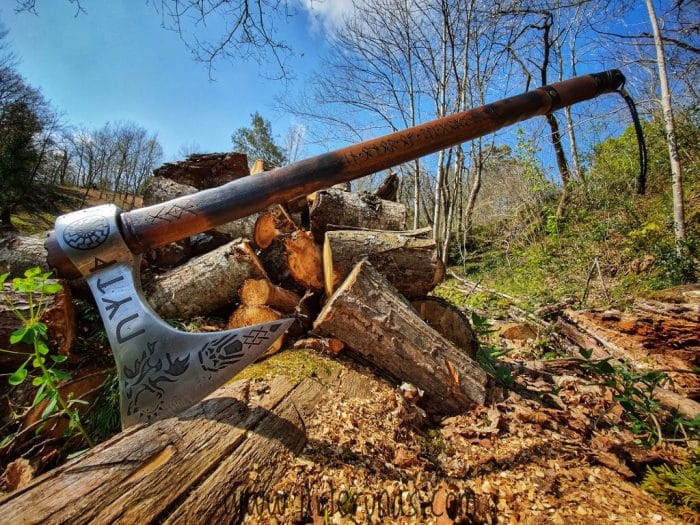
Image from ARTERUNAS – Handcrafted axes and knives
VIKING AX: HISTORY, TYPES, AND CHARACTERISTICS
The Viking axe was one of the most characteristic tools and weapons of the Viking Age. Its design varied depending on its use, ranging from small hand axes to large Danish axes wielded with both hands.
Made primarily of wooden handles and iron heads, axes were part of everyday life for the Nordic peoples and could be used for tasks such as logging and construction, as well as in combat.
There were different types of Viking axes, with varying blade sizes and shapes. Among the best known are the Danish axe, the bearded axe (or skeggöx), and various types of hand axes.
TYPES OF VIKING AXES
Axes were common tools in Scandinavian societies during the Viking Age. They were used for everyday tasks such as chopping wood, building houses, and working on the construction and maintenance of boats.
Their availability and versatility meant that they were also used as weapons. Unlike swords, which required more specialized craftsmanship and could be considered a more prestigious item, axes were much more common tools.
In combat, axes of various sizes could be used, ranging from one-handed models—which allowed the weapon to be used in conjunction with a shield—to large axes designed to be wielded with both hands.
The shape of the head, the length of the handle, and the size of the blade varied considerably depending on the type of axe and its function.
BEARDED AX OR SKEGGÖX
The bearded axe is one of the axe designs associated with the Viking Age. Its name refers to the extension at the bottom of the blade, which creates a distinctive “beard”-like shape.
This design provided a large cutting surface without excessively increasing the weight of the axe head. Various versions of this type of axe have been found in archaeological discoveries from the Viking Age.
DANISH VIKING AX OR TWO-HANDED AX
The Danish axe was a large type of axe used during the Viking Age and in the centuries that followed. It was characterized by a wide blade mounted on a long handle and was designed to be wielded with both hands.
Despite the size of its blade, it was designed to remain relatively lightweight to make it easier to handle. The handle could easily exceed one meter in length, providing greater reach during combat.
The Danish axe became one of the most recognizable weapons associated with Norse warriors and was later used in other parts of Europe as well.
VIKING THROWING AX
Throwing axes were smaller axes that could be used at close range. Although the axe is primarily associated with hand-to-hand combat and its use as a tool, there are historical references to the throwing of certain types of axes.
One of the best-known examples of a historical throwing axe is the francisca, which is primarily associated with the Franks and predates much of the Viking Age. Therefore, not all historical throwing axes should necessarily be considered Viking axes.
Axe throwing, as we practice it today as a sport and recreational activity, is a modern discipline and should not be confused with the combat practices of the Viking Age.
Although modern axe throwing is not a tradition directly inherited from the Vikings, the Viking axe remains one of the great symbols of Nordic culture.
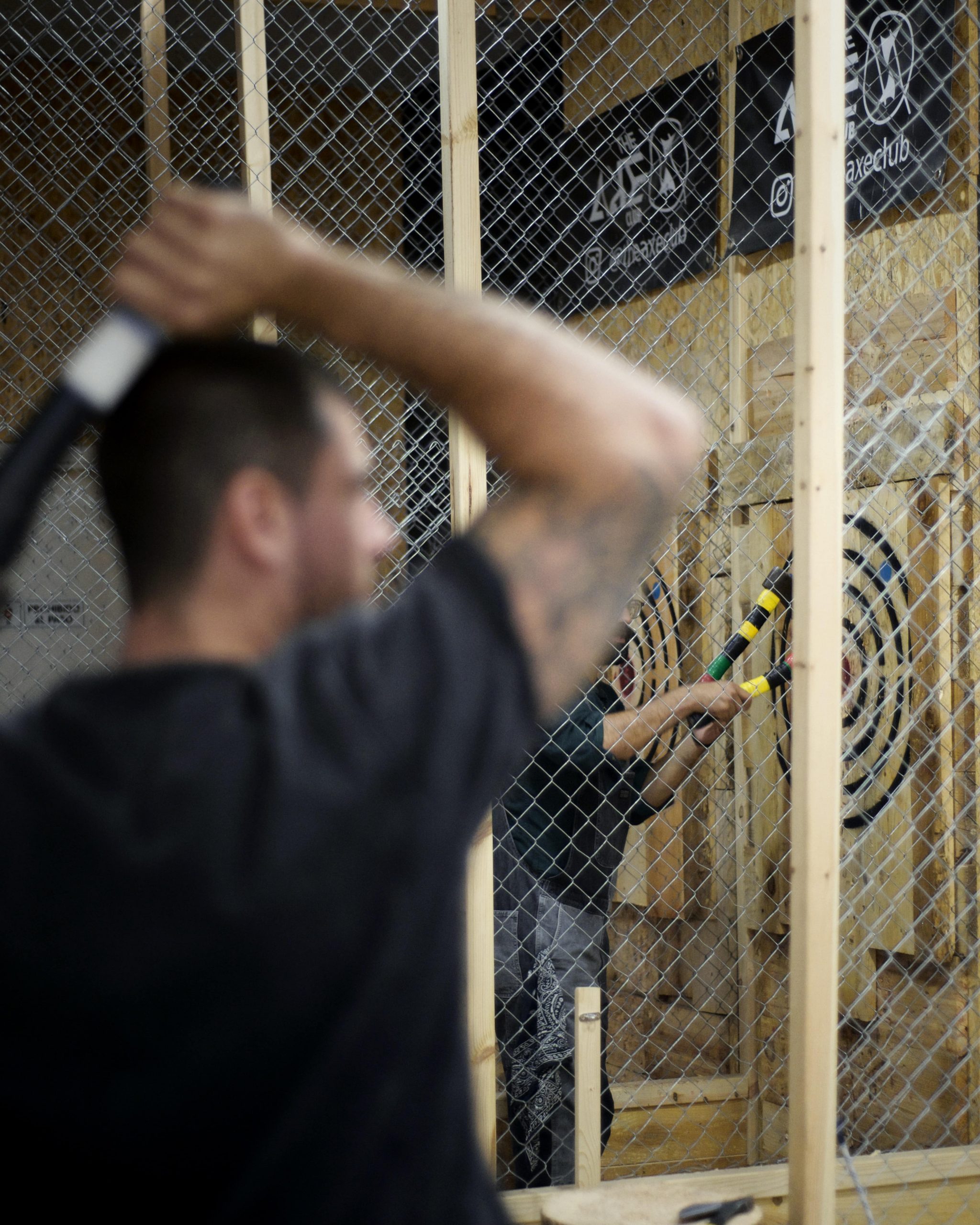
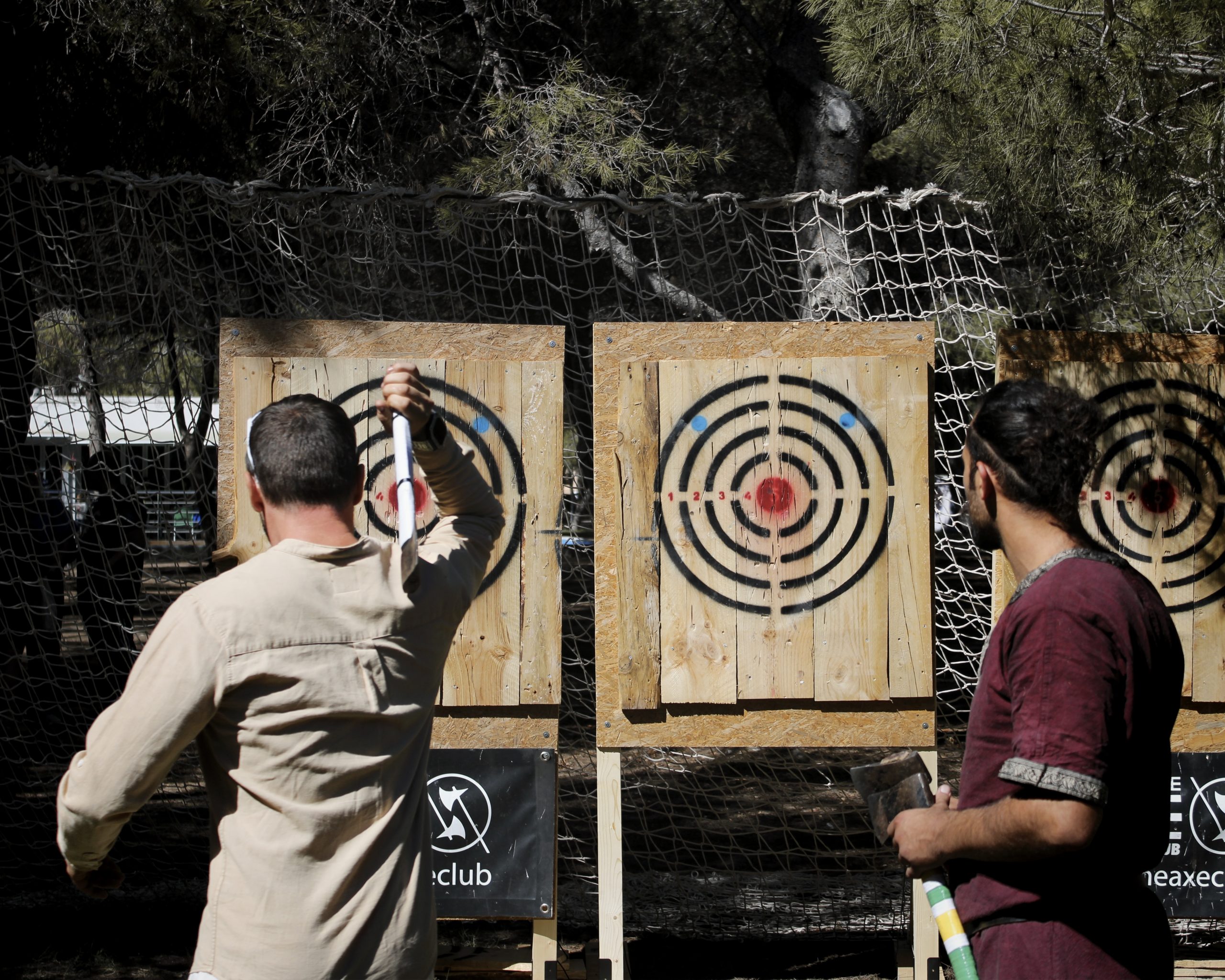
Today , axe throwing is practiced as a sport and recreational activity at facilities specifically designed for this purpose, with safety regulations and throwing techniques.
At The Axe Club Barcelona, you can learn how to throw axes with the help of our instructors, practice different techniques, and compete with your friends on our targets.
If you want to go beyond just learning about the history of the axe and try it out for yourself, check out our axe-throwing experience in Barcelona.